
Capped vs Uncapped Composite Fencing: What’s the Difference?
Capped and uncapped fence boards differ mainly in how their outer surfaces are built. Capped boards add a polymer shell over the wood plastic composite core. Uncapped boards leave that composite surface exposed.
Capped boards usually offer more surface protection for demanding sites with strong UV, frequent rain, or high stain risk. Uncapped boards can still suit lower exposure or budget sensitive projects. The better choice depends on climate, board formulation, and warranty coverage. This guide compares both across construction, upkeep, and cost. It mirrors the same split you will find in capped and uncapped composite decking.
Table of Contents
What Is the Structural Difference Between Capped and Uncapped Fence Boards?
Capped boards have a separate protective surface layer. Uncapped boards use the composite core itself as the finished exterior.
| Feature | Capped boards | Uncapped boards |
| Visible surface | Separate polymer cap | Exposed composite surface |
| Typical production | Co extruded surface and core | No separate cap layer |
| Core exposure | Reduced on capped faces | Direct surface exposure |
| Main benefit | Surface protection | Simpler construction |
| Structural strength | Depends on the full fence system | Depends on the full fence system |
How Are Capped Fence Boards Made?
Capped fence boards are commonly made by co extruding a polymer surface around a wood plastic composite core. The cap becomes part of the board during production. EVODEK capped profiles are produced this way, with the shell bonded to the core in a single step. The decking version works the same way, explained in our guide to capped composite decking.
The protective layer is intended to reduce direct exposure to sunlight, moisture, and common surface stains. Its performance still depends on the cap formulation and coverage.
How Are Uncapped Fence Boards Made?
Uncapped fence boards use the wood plastic composite itself as the visible surface. There is no separate polymer shell over that exterior face.
Their weathering behavior therefore depends more directly on the composite formulation, surface texture, and manufacturing quality.
Does Every Capped Board Have the Same Surface Coverage?
Not every capped profile protects the same faces, edges, or cut ends. Cap coverage should be verified from a cross section, technical drawing, or physical sample.
That check matters because exposed edges can behave differently from fully protected faces under moisture and sunlight.
Does the Cap Layer Make the Fence Structurally Stronger?
A polymer cap does not automatically make a fence structurally stronger. Structural performance comes from the whole fence system, not the surface finish.
A recurring comparison mistake is to treat a better surface finish as proof of a stronger fence. The supporting system needs a separate evaluation.
Which Type Performs Better Against Fading, Moisture, and Stains?
Capped boards usually provide more surface protection against UV weathering, moisture contact, and staining than comparable uncapped boards.
| Performance factor | Capped boards | Uncapped boards | What to verify |
| UV and fading | Usually better protected | More dependent on core formulation | Fade warranty and technical data |
| Moisture contact | Reduces direct surface exposure | Composite surface remains exposed | Edge and profile design |
| Stains | Usually easier to clean | More dependent on surface porosity | Cleaning guidance |
| Scratches | Depends on cap formulation | Depends on composite formulation | Physical sample |
| Color retention | Often more consistent | More affected by surface weathering | Warranty exclusions |
Which Type Resists UV Fading Better?
The polymer shell shields the composite core from direct exposure, so capped boards usually resist UV related surface weathering better.
Capped products can still change color outdoors. Buyers should compare fade warranties and each manufacturer’s definition of normal weathering.
Which Type Handles Moisture Better?
Capped boards reduce direct moisture contact across protected surfaces. That helps in rainy, humid, or irrigation heavy locations.
A cap does not make the entire fence waterproof. Cut ends, joints, and uncapped faces may still contact water.
Which Type Is Easier to Protect From Stains?
Boards with a cap are usually easier to clean after mud splash, irrigation marks, or organic contamination. The polymer surface limits direct contact with the composite core.
Uncapped surfaces depend more heavily on their own porosity and formulation. Prompt cleaning remains important for both types.
Does Capping Guarantee Better Scratch Resistance?
Capping does not guarantee better scratch resistance. Abrasion performance depends on cap chemistry, surface texture, and gloss level.
A physical sample is more useful than a generic capped label when scratch appearance matters.
Does Capped Composite Fencing Need Less Maintenance?
Capped fence boards usually need less intensive surface cleaning because the polymer layer reduces direct contamination of the core. Both types stay easier to care for than timber, as our guide to maintaining composite fencing explains.
Is Routine Cleaning Easier on a Capped Surface?
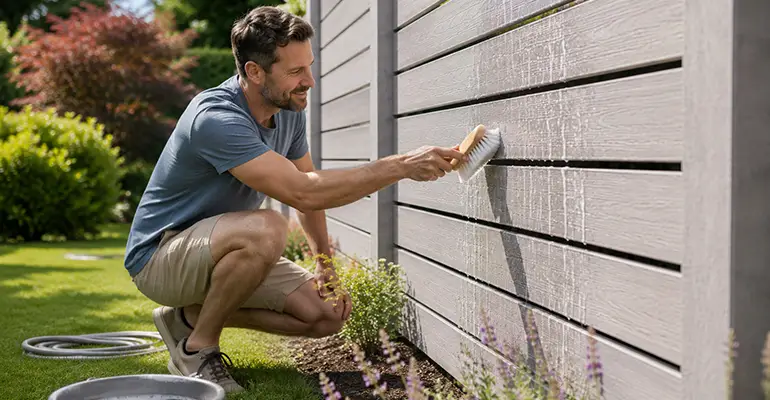
Routine cleaning is usually easier on capped boards because dirt and residue sit on the protective surface rather than on the composite core.
Water, mild soap, and a soft brush are typically enough. Cleaning instructions should still be checked before using chemicals or abrasive tools.
Can Vegetation and Shade Still Cause Problems?
Vegetation, deep shade, and trapped debris can still create dirty or slow drying areas on capped boards. Capping does not prevent residue from collecting on the surface.
In fence lines beside planting beds or sprinklers, I most often see buildup near lower board edges and shaded sections. Those areas need more frequent attention.
Is Capped Fencing Maintenance Free?
Capped fencing is low maintenance, not maintenance free. Outdoor dust, algae, and organic debris can collect on any exposed fence surface.
Good drainage and correct installation also matter. Surface protection cannot compensate for water or debris trapped by poor detailing.
Is Capped Fencing Worth the Extra Cost?
Capped fencing is easier to justify when UV exposure, moisture, or long term appearance matters more than the lowest initial price. For a full price picture, compare complete systems using our notes on composite fencing cost.
Why Do Capped Boards Usually Cost More?
Capped boards usually cost more because they require an additional surface material and a co extrusion production step.
The actual price difference should be compared between equivalent profiles, warranties, and complete fence systems. A broad percentage should not be assumed across brands.
When Does the Cap Layer Provide More Value?
The cap layer provides more value where sunlight, rainfall, or surface contamination is frequent.
It can also matter on prominent boundaries where color consistency is important. Lower exposure sites may not gain the same value from the upgrade.
Why Should Warranty Coverage Matter More Than Warranty Length?
Warranty coverage matters more than the headline term. Fade, stain, and installation exclusions can change what is actually protected.
Compare definitions, claim conditions, and exclusions before treating two warranties as equivalent.
Does a Higher Price Guarantee a Better Fence?
A higher board price does not guarantee a better complete fence. The full system carries the performance, not the board surface alone.
A well designed uncapped system can be a better project choice than a poorly specified capped system.
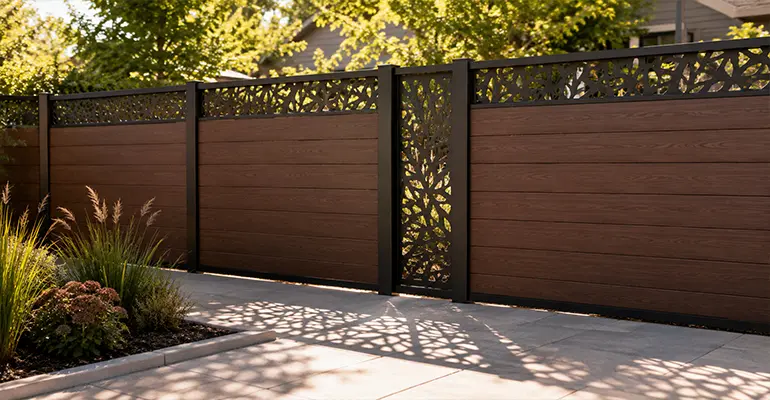
Should You Choose Capped or Uncapped Fence Boards?
Choose capped or uncapped boards by matching exposure, appearance, and budget to the project. Full system quality matters as much as the board itself.
| Project condition | Capped usually makes more sense | Uncapped can make sense |
| Strong UV exposure | Yes | Verify fade performance carefully |
| High humidity or frequent rain | Yes | Verify formulation and profile |
| Frequent soil or irrigation splash | Yes | Expect more cleaning |
| High appearance expectations | Yes | Compare weathered samples |
| Budget is the main priority | Compare total system cost | Often |
| Lower exposure location | Optional | Often |
When Should You Prefer Capped Boards?
Capped boards are usually the safer choice where strong sunlight, frequent rain, or staining exposure is expected.
The product should still be checked for the specific climate, installation method, and warranty conditions.
When Can Uncapped Boards Still Make Sense?
Uncapped boards can make sense where exposure is moderate and the product has suitable formulation and installation guidance.
Uncapped should not be treated as automatically low quality. The complete specification matters more than the absence of a surface cap. See the broader pros and cons of composite fencing for context.
Why Should You Compare Samples and Cross Sections?
Physical samples reveal cap coverage, color consistency, and cut edges more clearly than product photos.
Outdoor viewing is especially useful because natural light can expose differences in gloss, texture, and color. You can order free samples from EVODEK and inspect the cross section in your own light.
Why Should You Evaluate the Complete Fence System?
The complete fence system determines structural reliability, not the board surface alone. Several parts need review together:
- Posts and rails
- Fasteners and spacing
- Foundations and drainage
- Installation instructions
From five years of reviewing outdoor material specifications, the most common error is comparing boards carefully while giving too little attention to the support system. A correct composite fence installation protects the boards you chose.

Conclusion
Capped boards usually provide better surface protection against fading, moisture, and weathering. Uncapped boards can still suit lower exposure or budget sensitive projects.
The best choice depends on climate, formulation, and warranty coverage. Compare physical samples and the complete fence system before buying. Request product cross sections and warranty terms first. EVODEK offers both capped and uncapped composite fencing, with free samples so you can test the real board before you commit.
FAQ
Is capped fencing better than uncapped fencing?
Capped composite fencing is usually better where surface protection against UV, moisture, and staining is a priority. Uncapped fencing can still suit lower exposure or budget sensitive projects. Overall quality also depends on the core formulation, support system, and warranty. Capping is one performance factor, not the only quality indicator.
Does capped fencing fade?
Capped boards can still show some color change after long term outdoor exposure. The polymer surface is intended to reduce UV related fading compared with an exposed composite surface. Actual color retention depends on the formulation, climate, and exposure. Manufacturer fade warranties give a better basis for comparison than general claims.
Is capped fencing waterproof?
A capped fence board should not be assumed completely waterproof. The cap reduces direct moisture on protected faces. But edges, cut ends, and fastener locations may still contact water. Manufacturer guidance should be checked before assuming a product suits persistently wet conditions.
Can uncapped fencing be used in wet climates?
Uncapped composite fencing can be used in wet climates when its formulation, installation, and manufacturer guidance support those conditions. The exposed composite surface receives more direct weather contact. Moisture resistance should be verified rather than assumed. Check drainage, edge design, and warranty coverage before selecting uncapped boards for rainy locations.
Does capped fencing last longer than uncapped fencing?
Capped boards may keep their surface appearance longer because the polymer layer reduces direct exposure to UV, stains, and moisture. Service life cannot be predicted from capping alone. Formulation, installation quality, and maintenance also affect durability. Our guide to how long composite fencing lasts covers the durability factors in detail.
How can you tell whether composite fencing is capped?
A capped board can usually be identified by checking its cross section for a distinct outer layer around the core. Product specifications may also describe the board as capped or co extruded. A physical sample helps because surface color alone may not reveal the construction. Manufacturer drawings can show which faces and edges receive cap coverage.
Related Post


