
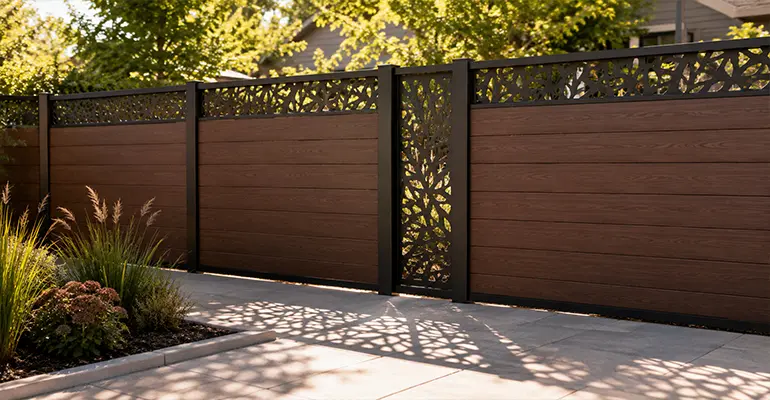
Do Composite Fences Fade?
Yes, composite fence panels can fade slightly, particularly during the first few months after installation. Capped composite with documented UV protection is designed to limit continued colour change after this early weathering period.
Initial weathering, long-term UV fading, and material failure are three different issues. A small, even shade change does not automatically mean the fence is defective. When I compare fencing specifications, I treat those three conditions separately. This makes product warranties and colour performance claims much easier to evaluate.
Table of Contents
How Much Do Composite Fences Fade After Installation?
Composite fencing may become slightly lighter after installation. The most visible change usually happens during the early weathering period. The exact amount varies by formulation, colour, cap construction, sunlight, and climate.
During the first few months, some composite manufacturers describe an initial weathering period of roughly 8 to 16 weeks. Other products may need several months before the colour settles. Sunlight, rain, and surface exposure gradually change the appearance of newly installed boards. This process is often called colour stabilisation or weathering. The manufacturer’s product data should define what change is considered normal.
Tannins and wood extractives can also shift the colour. The wood fibres in wood plastic composite contain tannins and other natural extractives. Moisture carries small amounts of these compounds toward the surface. Rain then gradually removes them. This can make a new fence look slightly lighter or create temporary watermarks. The effect is usually more visible on uncapped composite.
After the colour stabilises, composite fencing can still change slowly under UV exposure. The early weathering should not continue at the same rate forever. Capped boards use a polymer surface, pigments, and UV stabilisers to reduce continued exposure of the wood-plastic core. For this reason, “fade resistant” is more accurate than “fade proof.”
You can usually tell normal weathering from excessive fading by looking at how even and gradual it is. Normal weathering is limited and reasonably uniform. Persistent or strongly uneven colour loss deserves closer inspection. Keep in mind that a shaded panel and a fully exposed panel may weather at different rates.
| Indicator | Normal Weathering | Possible Excessive Fading |
| Timing | Mainly during early exposure | Continues noticeably after stabilisation |
| Appearance | Relatively even | Patchy or strongly uneven |
| Colour change | Limited shade adjustment | Unexpected or substantial loss |
| Structure | No structural change | May show surface deterioration |
| Action | Follow normal maintenance | Check specifications and warranty |
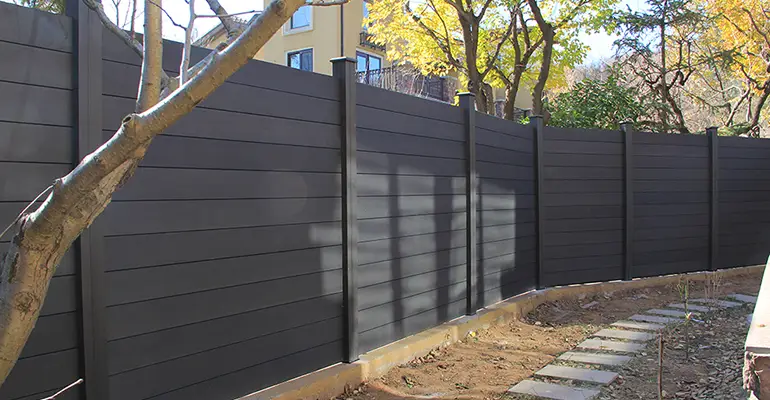
Why Do Capped Composite Fences Resist UV Fading Better?
Capped composite fencing usually keeps its colour better because a polymer layer separates the wood-plastic core from direct UV and moisture exposure. The cap structure matters more than broad marketing descriptions about product quality.
How UV exposure changes colour
Ultraviolet radiation gradually affects pigments and polymer surfaces exposed outdoors. More hours of direct sunlight increase cumulative UV exposure. This can produce slow changes in surface colour. Manufacturers reduce that effect with UV stabilisers, exterior grade pigments, and protective surface formulations.
What the protective cap is
A capped composite board has a wood-plastic core surrounded or partially covered by a polymer surface layer. The cap is usually bonded during co-extrusion rather than applied later like paint. This layer helps shield the core from UV, moisture, staining, and surface contamination.
Why uncapped composite weathers more
uncapped composite exposes its wood-plastic surface directly to outdoor conditions. That construction can make tannin release, moisture interaction, and surface weathering more visible. Performance still depends on the formulation. Two uncapped products can behave differently under identical exposure.
Remember that “fade resistant” does not mean a composite fence will look identical for its entire service life. Every exterior surface experiences sunlight, temperature changes, moisture, and contamination. A stronger buying criterion is documented colour performance. Check what the manufacturer considers acceptable fading and what the warranty actually covers.
| Feature | Capped Composite | Uncapped Composite |
| Surface construction | Polymer protective layer | Exposed composite surface |
| UV protection | Cap can contain UV protection | Depends mainly on core formulation |
| Moisture contact | Core is better isolated | Surface directly exposed |
| Early weathering | Usually more controlled | Often more noticeable |
| Colour retention | Generally more consistent | More formulation dependent |

What Makes Some Composite Fences Fade Faster Than Others?
Composite fence fading depends mainly on surface construction, UV exposure, pigment stability, colour, orientation, and environmental conditions. The word “composite” alone does not guarantee a specific level of colour retention.
Material quality and UV stabilisers make a real difference. UV stabilisers, exterior pigments, polymer formulation, and cap construction all influence long term colour stability. When I review product specifications, I look for measurable construction details before marketing descriptions. Technical information about cap structure and fade coverage is more useful than words such as superior or advanced.
Dark colours can make small shade changes more visible because the contrast is easier to see. This does not prove that every dark board has weaker UV resistance. A dark capped product with stable pigments can hold colour better than a lighter product with limited UV protection.
Orientation and sunlight hours also matter. Fence orientation changes the amount and timing of direct solar exposure. A surface receiving strong afternoon sun can accumulate more UV than a shaded section. Vertical fencing receives sunlight differently from horizontal decking, and latitude, nearby buildings, vegetation, and fence direction all affect the real exposure.
Coastal conditions, rain, and dirt can make a fence look faded without true pigment loss. Salt, dust, mould, minerals, and organic deposits can make composite fencing appear dull. This distinction is especially useful in coastal environments. Cleaning with manufacturer-approved methods can help you tell whether the problem is contamination or a genuine surface colour change.
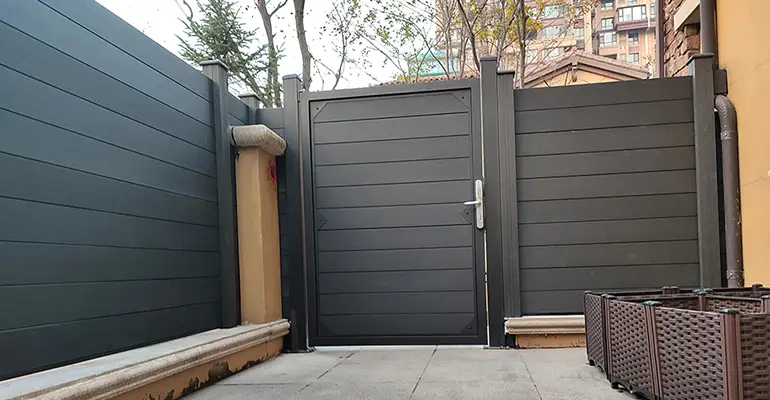
How Can You Choose a Composite Fence That Holds Its Colour Longer?
The best way to reduce visible fading is to choose capped composite with documented UV protection before installation. Cleaning can maintain appearance. It cannot compensate for weak UV resistance.
Choose capped composite with documented UV protection
Check whether the board uses a co-extruded protective surface and whether UV resistance appears in its technical information. Avoid relying on unsupported claims such as “will never fade.” The product construction and warranty give more useful evidence. EVODEK capped composite fencing uses a co-extruded polymer shell with UV-stabilised pigments to limit colour change after the early weathering period.
Check both the new colour and the expected weathered colour
Compare the new board colour with the weathered colour before placing a large order. A small shade shift can look much more noticeable across a whole fence line. Physical samples are especially useful when you choose dark colours or match fencing to existing cladding and decking.
Read the fade warranty carefully
A useful fade warranty should clearly explain how the manufacturer defines excessive colour change. Check the warranty period, fading coverage, exclusions, maintenance requirements, and any measurable colour change limit. Also confirm whether coastal exposure, installation conditions, or unapproved cleaners can affect coverage.
Clean the fence correctly
Cleaning cannot stop genuine UV fading. It can still remove dirt, salt, mould, and deposits that make a fence look faded. Use water, mild detergent, and methods approved by the manufacturer. Do not apply paint, stain, sealant, solvents, or strong chemicals without checking the product instructions first.
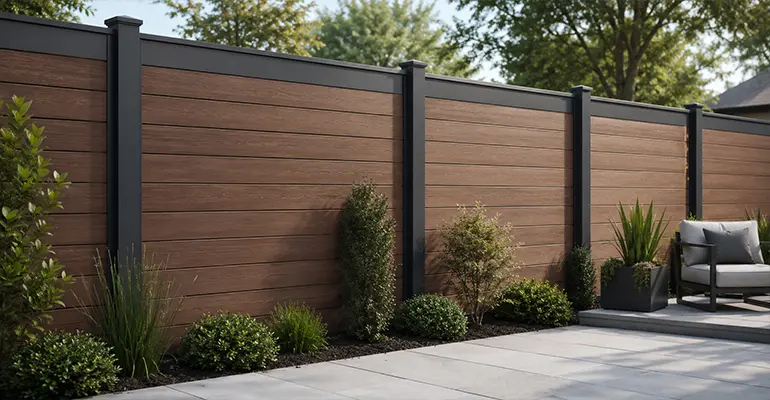
Conclusion
Composite fences can go through initial colour stabilisation and gradual UV weathering. Capped construction reduces continued exposure of the wood-plastic core. Normal early weathering should not be confused with product failure. UV protection, pigment stability, sunlight, colour, and climate all shape the long-term appearance.
Before buying, compare the cap construction, the expected weathered colour, and the fade warranty. Request a physical sample and written colour performance information before you choose a final fence colour. You can order free EVODEK samples to compare capped composite fence colours in your own light and climate before committing to a full order.
FAQ
Do composite fences fade in the sun?
Composite fences can fade slightly in sunlight because UV radiation gradually affects exterior pigments and polymer surfaces. Capped composite reduces this exposure with a protective surface that contains UV-resistant components. The degree of change depends on the product formulation, colour, orientation, climate, and total sunlight. A small amount of gradual weathering should not automatically be treated as a defect.
How long does composite fencing take to fade?
Some composite fencing products show their most noticeable initial colour adjustment during roughly the first 8 to 16 weeks. Other products may take several months to stabilise. There is no universal fading period for every formulation. Use the manufacturer’s weathering information and expected colour range rather than assuming one timeline fits all composite fences.
Is capped composite fencing more fade resistant?
Capped composite fencing is generally more fade-resistant because its polymer surface reduces direct UV and moisture exposure to the wood-plastic core. The cap can also contain stabilisers and exterior-grade pigments made for outdoor use. Actual performance still depends on cap formulation, manufacturing quality, colour, climate, and total sunlight. Evaluate capped construction together with the product specifications.
Does fading mean composite fencing is damaged?
Normal composite fence fading does not mean the fence has structural damage. Early colour stabilisation and minor long-term weathering are usually cosmetic. Structural problems involve separate signs such as cracking, severe deformation, failed fixings, or abnormal surface deterioration. If colour loss stays strongly uneven or exceeds the manufacturer’s stated limits, review the product warranty and installation conditions.
Can faded composite fencing be painted or restored?
Some composite fencing can accept coatings. Compatibility depends on the surface construction and manufacturer instructions. Capped polymer surfaces may not bond properly with paints or stains made for timber. Cleaning can remove contamination and restore a cleaner appearance. It cannot reverse genuine UV pigment change. Check the product warranty before applying paint, stain, sealant, solvents, or restoration chemicals.
Related Post


