
What Are the Different Types of Decks?
Residential decks are usually classified in two ways: by structure and by surface material. The main deck structures include attached, floating, raised, multi-level, wraparound, rooftop, covered, and pool decks. The structure decides how the deck fits your property, while the surface material shapes maintenance, moisture behavior, appearance, and long-term care. A good deck plan treats these as two separate decisions.
Table of Contents
What Are the Main Types of Decks by Structure?
The main deck structures differ in how they connect to the house, handle elevation, and support specific outdoor uses.
Attached decks
They connect structurally to the house and usually give direct access from an interior living area, often extending a kitchen, dining room, or family room outdoors. The connection needs careful detailing, so attachment points, flashing, drainage, door height, and structural loads should all be checked before construction.
Detached, floating, and ground level decks
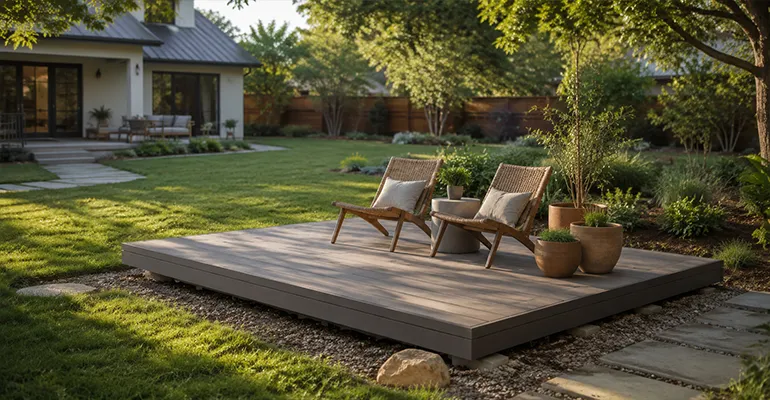
They stand independently from the house, which allows more flexibility in where you place them. A floating deck usually sits close to grade, while a freestanding deck can also be elevated. Drainage, soil conditions, ventilation, size, and local rules still shape the design. If you are weighing this against a house connection, see this comparison of a floating deck vs an attached deck.
Raised and multi-level decks
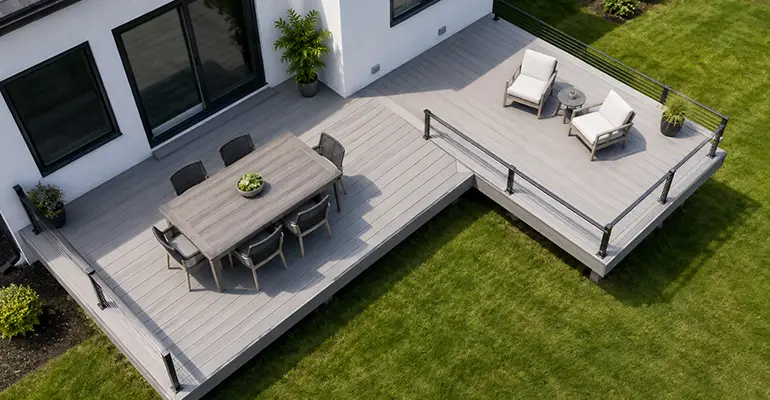
They work where exterior doors sit above grade or the yard changes elevation. Multiple levels can separate dining, cooking, seating, and viewing areas. Second-story decks also belong here because the usable surface starts well above ground, so footings, stairs, guards, and load paths need project-specific structural review.
Learn More: Multi-Level Deck Design Ideas

Wraparound, covered, rooftop, and pool decks
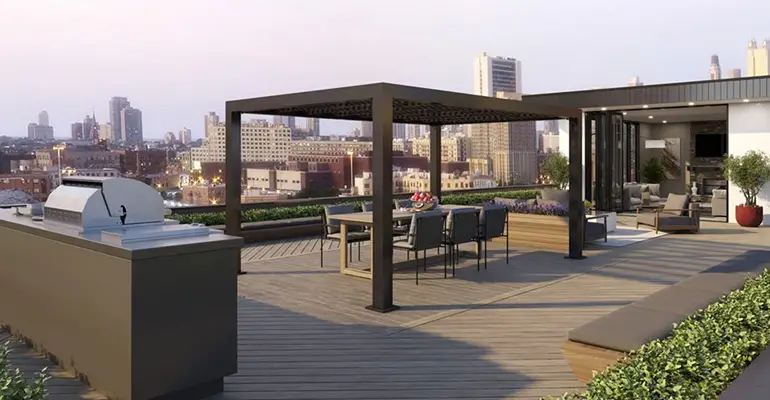
They each solve different access, shelter, space, or activity needs. Wraparound decks connect several sides of a house. Covered decks add overhead protection. Rooftop decks use space above a structure. Pool decks prioritize drainage, circulation, and wet surface conditions.
| Deck Type | Best Suited For | Main Planning Variable |
| Attached | Direct indoor outdoor access | House connection and flashing |
| Floating | Flexible placement on suitable sites | Ground and drainage conditions |
| Multi level | Sloped or elevated sites | Elevation changes and access |
| Wraparound | Multiple outdoor zones | Available perimeter |
| Rooftop | Limited ground space | Structural capacity and waterproofing |
| Pool | Pool access and seating | Drainage and circulation |
A useful rule of thumb: ground-level decks typically sit under 30 inches high, below the point where many codes require guardrails. Raised decks sit above that height and usually need guards and stairs.
What Types of Decking Materials Can You Choose?
Common decking materials are wood, composite, PVC, and aluminum. Your choice affects maintenance, moisture behavior, appearance, heat response, and project cost.
Wood
It uses natural lumber, including pressure-treated boards and species such as cedar, and appeals to homeowners who want visible grain and a natural surface. It usually needs more routine care than the alternatives, with cleaning, staining, sealing, and repair frequency depending on species, finish, climate, and exposure. Wood decking generally lasts 15 to 20 years with regular maintenance.
Composite
It usually needs less maintenance than wood because it does not follow the same staining schedule. Most products combine polymers with wood fiber or another reinforcement, and quality EVODEK composite wood decking lasts 25 to 30 years.
Products still vary by manufacturer, so check heat response, slip resistance, board profile, fastening systems, color retention, and warranty terms before you specify. In the deck content and product comparisons I have reviewed, maintenance expectations often change the final material choice more than appearance alone.
PVC
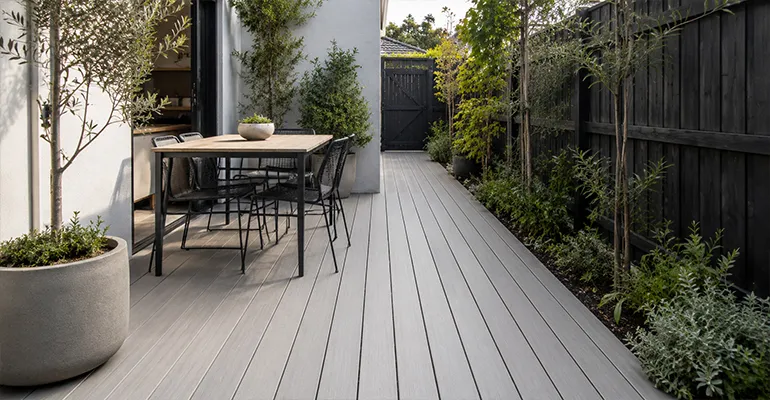
It uses a polymer surface with no wood fiber, which sets it apart from wood-plastic composite decking. It is often chosen where moisture exposure matters, and it typically lasts 30 years or more. Performance is product-specific, so verify surface temperature, texture, expansion behavior, fastening requirements, and color options with the manufacturer.
Aluminum
It suits projects that prioritize non-wood construction and low upkeep, and it does not decay like untreated wood. Its use depends on structural design, fastening systems, appearance goals, and budget. It is less common in typical residential projects than wood or composite, and it usually serves specialized applications.
| Decking Material | Routine Maintenance | Typical Lifespan | Typical Decision Factor |
| Wood | Higher | 15 to 20 years | Natural wood surface |
| Composite | Lower than wood | 25 to 30 years | Reduced routine maintenance |
| PVC | Low | 30 or more years | Frequent moisture exposure |
| Aluminum | Low | 30 or more years | Specialized applications |
Structure and material also interact. Rooftop decks favor lightweight surfaces such as composite or pavers to limit added load. Pool decks favor slip-resistant, moisture-stable surfaces. Matching the material to the structure prevents problems that appearance alone would not reveal.
Which Deck Type Works Best for Different Yards and Uses?
The best structure depends on yard slope, available space, house access, and the activities you plan for the space.
Flat yards
They often suit ground-level or floating decks because they can avoid a tall elevated structure, and their independent placement can simplify some layouts. Flat ground does not remove every issue, though, so drainage, soil movement, airflow, setbacks, and local requirements still need review.
Sloped yards
They often call for raised or multi-level designs that create usable surfaces at different elevations and connect upper-level doors to lower yards. In projects I have reviewed, sloped yards create more access and foundation constraints than homeowners first expect, and early site measurements can prevent major layout revisions later.
Small properties
They may benefit from compact attached decks that keep outdoor space close to the house and preserve yard area, or from rooftop decks that add usable area above a suitable structure. Rooftop decks need more site-specific verification, since structural capacity, waterproofing, drainage, safe access, wind exposure, and local rules all determine whether the concept is feasible.
Pool and entertainment areas
They should be sized around movement, furniture, cooking zones, and access routes. More square footage does not automatically produce a better layout. Pool areas need careful drainage and surface selection, and entertainment decks should keep clear circulation around grills, doors, stairs, tables, and seating.
How Should You Choose Between Different Deck Types?
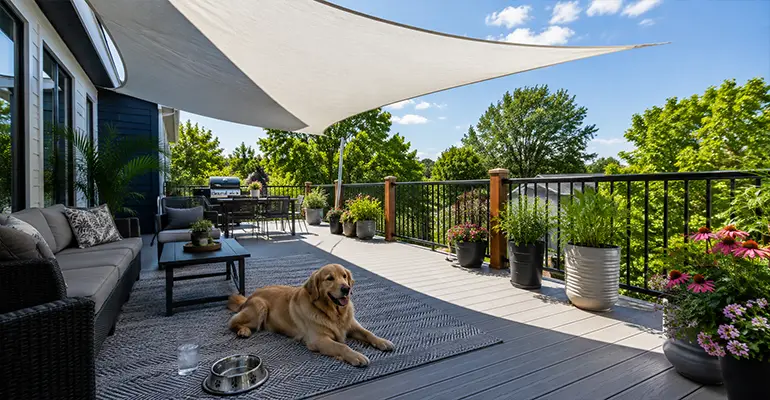
Choosing a deck starts with site conditions, then moves to material maintenance, exposure, budget, and local construction requirements.
Start with yard conditions and house access
Yard conditions usually narrow the structural choices before surface materials matter. Check slope, door elevation, drainage, usable footprint, foundation conditions, and desired access points. A floating deck may suit one flat yard, while a raised or multi-level deck fits another property with similar square footage but different elevation.
Match the material to maintenance and exposure
The decking material should match both the upkeep level you accept and the environmental exposure the deck will face. Sun, moisture, staining, and temperature all matter, and wood, composite, PVC, and aluminum respond differently. Confirm product-specific installation limits and warranty requirements before purchase.
Compare upfront budget with long-term cost
Initial material price is only one part of total deck cost. As a rough guide, installed pressure-treated wood runs about $15 to $25 per square foot, composite $30 to $60, PVC $30 to $70, and aluminum $40 to $80. Cleaning, staining, sealing, repairs, replacement boards, and how long you keep the deck all affect real value. A lower purchase price can lead to more maintenance later, and a higher material price does not automatically make a product the best choice.
Learn More: How Much Does a 20×20 Composite Deck Cost?
Verify permits and codes before building
Permit and code requirements depend on jurisdiction, deck height, size, attachment method, structural design, and property conditions. Before construction, verify footings, guards, stairs, setbacks, loads, and attachment details with the local building authority and qualified professionals.
Conclusion
The right deck combines a structure that fits the property with a surface material that fits your maintenance expectations. In my experience, the strongest choices start with site conditions and realistic upkeep requirements, not appearance alone. Compare structure, exposure, maintenance, budget, and local rules before finalizing anything, and ask a qualified deck professional to verify the layout and material choice for your property.
Order free EVODEK samples to compare composite decking colors and profiles for your chosen deck type, or use the decking calculator to estimate materials once your design is set.
FAQ
What are the most common types of decks?
The most common residential deck structures include attached, detached, floating, raised, multi-level, wraparound, rooftop, covered, and pool decks. Attached decks connect to the house, while floating decks stand independently. Raised and multi-level decks handle elevation changes. Wraparound, rooftop, covered, and pool decks serve more specialized space, shelter, or activity needs.
What is the difference between an attached deck and a floating deck?
An attached deck connects structurally to the house, while a floating deck stands independently from the building. Attached decks often extend indoor living areas through an exterior door. Floating decks allow more placement flexibility on suitable sites. Both designs still require proper foundations, drainage planning, and compliance with local construction rules.
What type of deck is best for a sloped yard?
Raised or multi-level decks are commonly used for sloped yards because they create usable surfaces across changing elevations. A raised deck can connect an elevated door to the yard, and a multi-level design can divide the slope into separate zones. Foundation design, stairs, guards, drainage, and local requirements should be verified for the specific site.
What are the main types of decking materials?
The main residential decking materials are wood, composite, PVC, and aluminum. Wood provides a natural surface but usually needs more routine care. Composite generally reduces staining and sealing requirements. PVC contains no wood fiber and is often chosen for moisture exposure. Aluminum is less common and usually serves specialized projects.
Is composite decking better than wood decking?
Composite decking is not universally better than wood, but it usually requires less routine surface maintenance and lasts longer, around 25 to 30 years versus 15 to 20 for wood. Wood offers natural grain and suits owners who accept periodic cleaning, staining, or sealing. Composite suits buyers who prioritize lower upkeep. The better choice depends on budget, appearance, exposure, and maintenance expectations.
How much does a deck cost by material?
Installed deck cost varies by material and region. As a rough guide, pressure-treated wood runs about $15 to $25 per square foot, composite $30 to $60, PVC $30 to $70, and aluminum $40 to $80. These figures cover typical installed pricing, but structure type, height, site access, and local labor rates can move the final number in either direction.
Do all decks require a building permit?
Not every deck follows the same permit process, because requirements vary by jurisdiction and project design. Permit rules can depend on height, size, attachment method, setbacks, and structural configuration. Check local requirements before construction begins. A local building authority or qualified professional can confirm the rules for your specific property.
Related Post


