
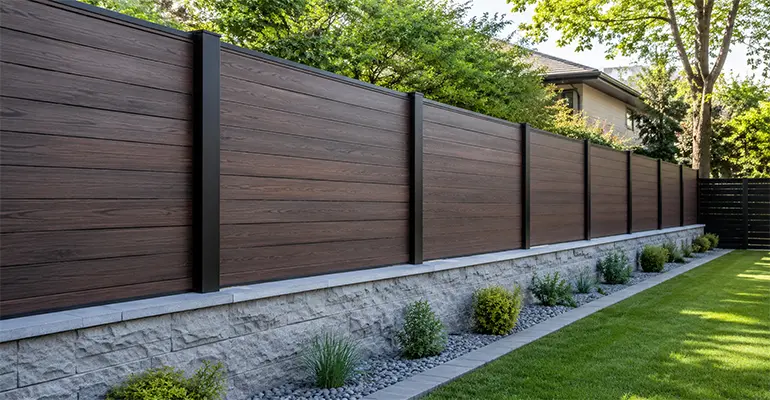
Composite Privacy Fence Ideas for Small Backyards
A small backyard needs privacy without feeling boxed in. The right composite fence solves both problems through careful height, color, and layout choices. The best designs use simple lines, limited colors, and space-saving details while reducing the routine upkeep that many wood fence systems require.
Homeowners often choose the fence before checking sightlines, daylight, and usable space. This guide focuses on designs that improve privacy while protecting the sense of openness in a compact yard.
Table of Contents
Which Composite Privacy Fence Ideas Work Best for Small Backyards?
The best composite privacy fence ideas for small backyards balance screening, daylight, airflow, and visual width.
| Design | Best For | Privacy Level | Effect on Small Spaces |
|---|---|---|---|
| Horizontal slats | Narrow yards | High | Makes the yard look wider |
| Full panels | Close neighbors | Very high | Creates maximum screening |
| Two tone panels | Modern patios | High | Adds visual depth |
| Composite with metal | Contemporary yards | Medium to high | Reduces visual heaviness |
Horizontal slats
This design can make a narrow backyard appear wider because the long lines guide the eye across the space. This layout works well along long side boundaries. Keep board spacing and trim consistent to avoid visual clutter. For privacy with airflow, space horizontal boards 1/4 to 1/2 inch apart. For full screening, install boards with no gap using tongue and groove or overlapping profiles.
Full privacy panels
They work best where neighboring windows, patios, or walkways create direct sightlines into the yard. Solid panels remove visible gaps between boards, making them useful where privacy matters more than airflow. In very small yards, dark solid panels can feel visually heavy, so light gray composite or natural wood tones often create a softer background.
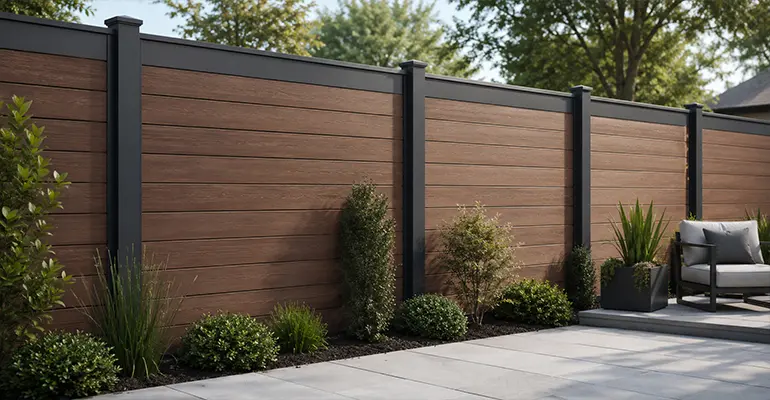
Two-tone fencing
They add visual depth without using additional ground area. A practical combination pairs warm wood tone boards with charcoal or black posts. The contrast defines the fence without adding physical bulk. Limit the design to two main colors, because too many finishes can make a compact backyard look fragmented. For more layout options, these ways to personalize your composite fence show horizontal patterns, dual-tone colors, and integrated lighting.
Composite and metal
These fences provide privacy with a slimmer visual profile. Aluminum posts often look lighter than thick timber framing, which helps compact patios feel less enclosed. Another option uses solid composite boards below and an open section above, protecting seated privacy while preserving daylight.
How Should You Choose a Privacy Fence for a Small Backyard?
A small backyard fence should be chosen according to sightlines, available light, yard width, and local height rules.
Fence height should block the specific view into your seating area instead of simply reaching the maximum permitted height. Sit where you normally use the yard and check which windows, balconies, or paths have a direct view. This test can prevent unnecessary fence height. A lower fence may preserve more daylight while still solving the privacy problem.
A 6 ft fence provides sufficient privacy for most seated areas. Fences above 6 ft often require a permit in many U.S. jurisdictions, and front yard limits are usually lower than backyard limits. Check your local height limits and HOA restrictions before ordering panels.
Lighter colors and simple patterns make small yards feel less enclosed. Light gray, muted brown, and natural wood tones reduce the visual weight of a fence in a compact yard. Repeating one panel style creates a cleaner boundary and reduces visual interruption. In projects I have reviewed, excessive trim and multiple contrasting sections often make small yards feel more crowded.
Partial open sections can improve airflow and daylight while maintaining privacy at eye level. One useful layout uses solid privacy panels below and spaced slats near the top. Another option uses a narrow louvered section. These designs work well where full screening would darken a patio or planting area.

Is Composite Fencing Better Than Wood for a Small Backyard?
Composite fencing usually requires less routine finishing than wood, but it often costs more at installation. Composite fencing typically costs $15 to $30 per linear foot for materials, while basic wood runs $10 to $20 per linear foot.
| Factor | Composite Fence | Wood Fence |
|---|---|---|
| Upfront cost | Usually higher | Usually lower |
| Painting or staining | Usually unnecessary | Often required |
| Rot resistance | Typically resistant | Depends on species and treatment |
| Insect resistance | Typically resistant | Depends on species and treatment |
| Appearance | More consistent | Natural variation |
| Routine maintenance | Lower | Higher |
Composite fencing usually needs less recurring maintenance because routine staining, sealing, and painting are generally unnecessary. Most upkeep involves removing dirt, pollen, mildew, or surface debris using methods approved by the manufacturer. Wood fencing may need repeated protective treatments depending on species, climate, coating, and exposure. For a small yard, fewer refinishing projects also mean less disruption around furniture, plants, and narrow walkways.
The long-term cost comparison changes when maintenance is considered. Paint, stain, sealant, replacement boards, and labor increase wood ownership costs over time. I would not choose composite only because it might save money. Its clearer advantages are predictable upkeep and a consistent appearance.
EVODEK composite fence offers consistent dimensions and finishes, but installation details still matter. Composite materials expand and contract as temperatures change, so required gaps, fasteners, and post systems vary by manufacturer. Follow the installation instructions for the exact fence system you buy.
Learn More: Are Composite Fences Better Than Wood?
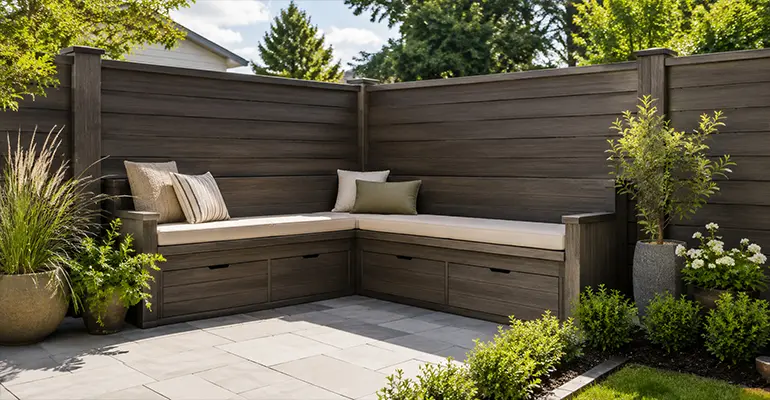
How Can Plants and Lighting Improve a Small Composite Fence?
Plants and low-profile lighting can soften a composite fence without taking much usable space from a small backyard.
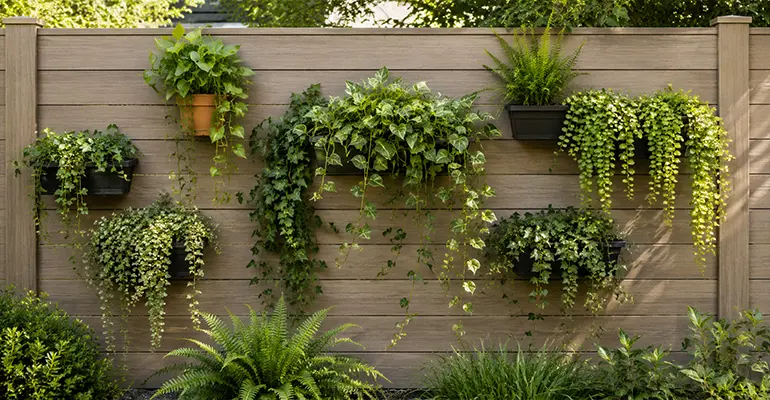
Vertical planting
They add greenery while keeping patios, paths, and seating areas clear. Use narrow trellises, wall planters, or climbing plants such as jasmine, clematis, or star jasmine near the fence line. Confirm that attachments are compatible with the fence system. Heavy planters should not hang from unsupported panels. Use independent supports unless the manufacturer permits panel-mounted loads.
Narrow planters
They reduce the visual weight of large solid privacy panels. Choose long containers with limited front-to-back depth to preserve more walking and seating space. Tall grasses and upright shrubs create layered screening without covering the entire fence.
Low-profile lighting
It improves visibility without overwhelming a compact outdoor area. Use post lights, downward-facing fixtures, or low-output LED strips. Aim the light toward paths and seating instead of neighboring properties. A few evenly spaced fixtures usually create a cleaner result than many bright lights.
Conclusion
The best small yard fence solves a specific privacy problem without making the space feel closed. Horizontal boards suit narrow yards. Solid panels suit direct sightlines. Partial open sections help preserve light and airflow. Light colors and simple patterns keep a compact yard feeling open, and composite reduces routine finishing work compared with many wood systems.
Measure your sightlines, confirm local rules, and plan gates first. Then compare fence systems that meet those exact requirements. Order free EVODEK samples to compare composite privacy fence colors and profiles for your backyard.
FAQ
What is the best privacy fence for a small backyard?
A horizontal composite fence is often a strong choice for a narrow backyard because horizontal lines can make the space appear wider. Full panels work better where neighboring windows create direct sightlines. The best choice depends on privacy needs, daylight, and yard proportions. A small backyard fence should solve the specific view problem without using unnecessary height.
Does a horizontal fence make a small yard look bigger?
A horizontal fence can make a narrow yard look wider because its long lines guide the eye across the available space. Consistent board spacing strengthens this effect, and simple colors reduce visual clutter. Horizontal fencing does not physically enlarge the yard, but it changes how the proportions appear from patios and seating areas.
How tall should a privacy fence be in a small backyard?
A privacy fence should be tall enough to block the required sightline while remaining within local regulations. A 6 ft fence provides sufficient privacy for most seated areas. Fences above 6 ft often require a permit. Neighboring windows, elevation differences, and seating positions affect the required height, so measure the actual sightline before choosing panels.
Is composite fencing more expensive than wood?
Composite fencing usually costs more upfront than basic wood fencing, typically $15 to $30 per linear foot versus $10 to $20 for wood. However, composite normally requires less painting, staining, and sealing. Wood prices vary by species and treatment. Compare the total installed cost and expected maintenance instead of comparing only the price of individual boards.
How much maintenance does a composite privacy fence need?
A composite privacy fence usually needs periodic cleaning and visual inspection rather than repeated painting or staining. Dirt, pollen, and organic debris can be removed using manufacturer-approved methods. Maintenance requirements vary by product. Check fasteners, posts, gates, and panel movement during routine inspections, especially after severe weather.
Can you install a composite privacy fence yourself?
Experienced DIY homeowners can install some modular composite fencing systems, but correct post placement and alignment are essential. Sloped sites, concrete footings, heavy gates, and complex property lines increase installation difficulty. Check the manufacturer’s instructions before starting. Professional installation may be more practical when the project requires surveying, major grading, or complex gate hardware.
Related Post


