
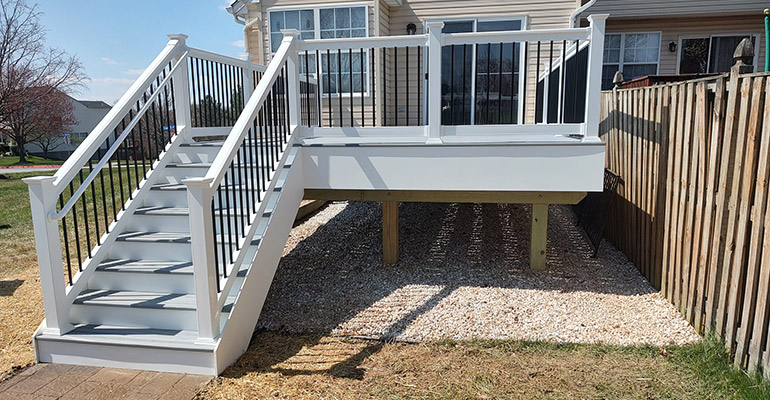
Deck Bracing: Prevent a Swaying Deck And Build a Strong Deck
Imagine you’ve spent weeks building a deck and now it’s time to enjoy it. But then you step out onto the deck and realize that it wobbles from side to side as you walk on it. Not only is it unpleasant if the deck has an unstable surface, but it’s also a major safety hazard. Because it disturbs your balance, you may fall. Therefore, bracing for decks is very important to maintain the structural integrity as well as ensure the safety of your outdoor space. In this blog, we bring an introduction to deck bracing to make preventing a swaying deck an easy task.
Table of Contents
What Is Deck Bracing?
Deck bracing is a structural support element that is added to a deck to increase its stability and strength. The next article will cover what situations require deck bracing and what type of bracing can help you build a sturdy deck.
Why Is Deck Bracing Necessary?
Deck bracing helps to prevent excessive deck rocking and deflection. Deflection is the bumpy feeling that a deck creates when you walk on it. Excessive spans and undersized joists and beams are the main causes of deflection when walking, and swaying is when the deck moves from side to side. In addition to bracing deck posts that are too few or undersized, posts that are not securely attached to the beams or joists that are not securely fastened can cause swaying.
Deck Bracing Can Make a Deck Safe and Long-Lasting
Deck bracing enhances the overall load-bearing capacity of the deck. It also effectively increases the load-bearing capacity of structural members such as beams, posts, and joists. Simply put, properly installed deck bracing makes a deck stronger, and a stronger deck is a safer deck.
Swaying of the deck not only creates an uncomfortable experience for those on the deck, it also creates additional risks. On top of that, weakened wood parts, loose fasteners, and failing structural components can also be a problem. And on a properly braced deck, these problems can occur more quickly. A simple bracing for decks can make a deck last longer and eliminate the need for costly repairs.
Common Types of Braces for Decks
Generally speaking, there are these main types of bracing for decks. Each type of deck bracing has a different purpose. The most common types of decking bracing include knee bracing, V bracing, cross bracing, blocking, and the use of structural hardware. Generally, one type of decking bracing is sufficient. However, it is not uncommon for two or more decking braces to be used on a deck.
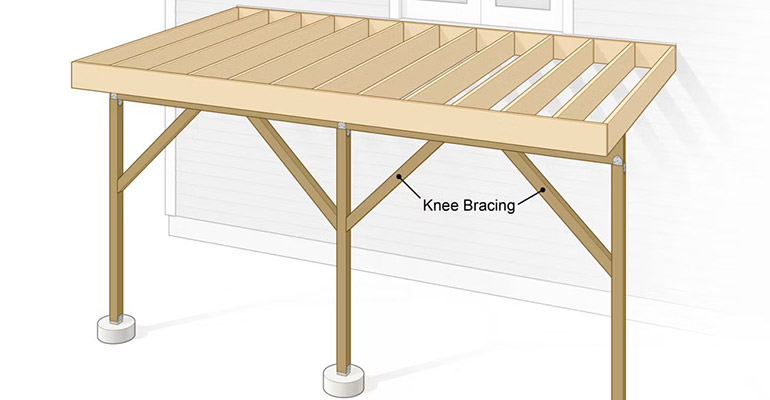
Knee Bracing for Decks
Deck knee bracing, also known as diagonal sway bracing, is installed at an angle between the deck posts and beams. To prevent decks attached to the house from swaying, knee bracing is usually only required between the stringer and the transom perpendicular to the joists.
To prevent some freestanding decks from swaying, additional braces from the posts parallel to the joists are required. These braces are usually attached to the same joists as the posts. In addition to preventing the deck from swaying, deck knee bracing increases the amount of weight the beams can hold. This has the potential to reduce deck sway or increase the span of the crossbeam between the posts.
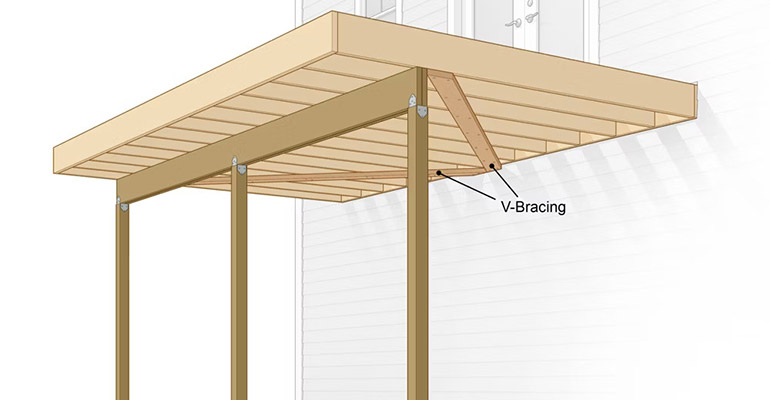
V-Bracing
One of the easiest ways to prevent deck sway is to install V-Bracing, which consists of two 2×6 boards installed at a 45-degree angle from the subfloor to the beams. Once installed, the two boards form the shape of the letter V. V-bracing adds strength by tying all the joists together, so they must be fastened to every joist that passes through.
Another method is to cut slots in the tops of the joists and install metal T-bracing straps before installing the decking. This method cannot be used if you have already completed the installation of the freestanding decks.
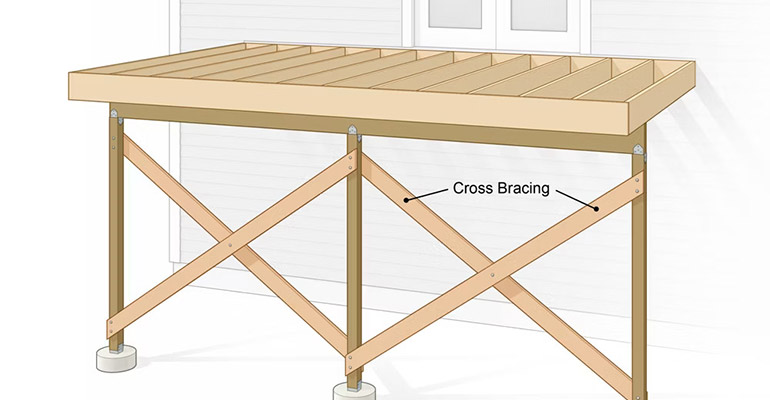
Cross Bracing
Deck cross bracing usually refers to decking installed in an X pattern between two adjacent posts. Cross bracing is effective in preventing the deck from rocking and helps stabilize the bottom of the posts. This is important for taller posts that are not buried or firmly attached to the ground. For some taller decks, cross-bracing is a very visible method.
Bracing Hardware
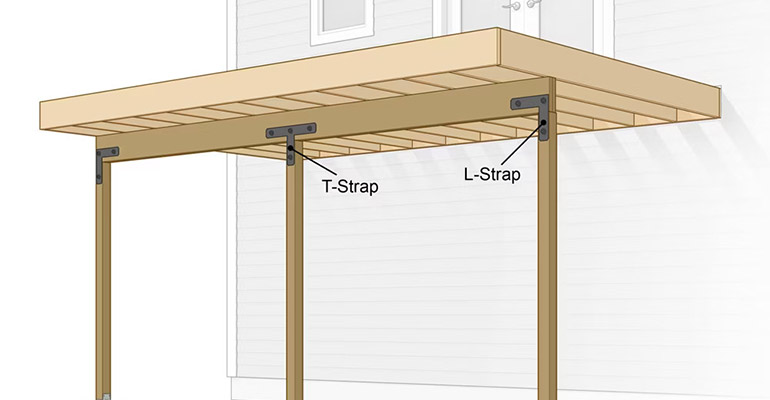
T-belts and L-belts are the most common types of anti-sway hardware. Both types of straps can be used when the stringer is directly under the drop beam. T-bracing straps are the most common method used in renovations. However, when the strut is located at the end of the beam, L-shaped bracing straps are essential. Bracing straps prevent freestanding decks from swaying and greatly strengthen the connection between the column and the beam.
Deck Bracing Requirements
Some municipalities require a building permit to build a deck. During the building permit application process, the municipality will provide a manual of structural requirements for simple designs. If you live in a rural area without a building official to consult, check the requirements of the nearest town. For complex deck designs or decks built with unique building materials, you may need to provide detailed deck plans.
*Not every area or town has the same bracing requirements. So before starting a deck project, discuss your specific deck plans with your local building official.
Do All Decks Require Deck Bracing?
Not really. Generally, free-standing decks or high decks require deck bracing.
- Freestanding deck: A house is like a sturdy deck anchor. So when the deck is not attached to the house, it will likely need some sort of bracing to provide additional support. Not all municipalities have the same freestanding bracing requirements, though.
- Multi-Level Decks: The longer the posts, the easier they are to move and the better the support. Knee bracing or cross bracing can help keep a multi-level deck stable.
- Narrow post decks: The thicker the posts, the more stable the deck will be. 6×6 posts will definitely support a taller deck than 4×4 posts.
Can I Add Deck Braces to Stabilize My Deck After the Project Is Complete?
Regardless of when your deck was built, you can add deck bracing if you feel your deck is becoming unstable, but not all types of deck braces will work on an existing deck. The type of deck braces you choose will depend on the design of the structure.
Summary
Deck bracing is a structural measure that prevents your deck from swaying side to side and bouncing underfoot. Without proper bracing, a deck becomes uncomfortable to use and potentially dangerous. The right bracing method depends on your deck type. Regardless of the bracing method you choose, the quality of your decking material also plays a role in long-term structural performance.
EVODEK composite wood decking maintains dimensional stability over time. It does not warp, rot, or soften the way untreated wood can. This means the surface layer stays flat and secure on top of a properly braced substructure. For help planning your deck project, use the EVODEK decking calculator or request free samples to evaluate material options.
FAQ
Why does my deck sway when I walk on it?
The most common cause is insufficient bracing between the posts and beams. Other causes include undersized posts (4×4 instead of 6×6 for taller decks), loose post-to-beam connections, and posts that are not securely anchored at the base. Freestanding decks are more prone to swaying because they lack the stabilizing anchor that a house wall provides.
What is the best type of bracing for a deck?
It depends on the problem and the deck design. Knee bracing is the most versatile and widely used method. It works for both attached and freestanding decks. Cross bracing is best for tall decks where the posts need bottom stabilization. V-bracing is the easiest to add and works well for reducing bounce and lateral movement across the joist system.
Do ground-level decks need bracing?
Usually not. Decks that sit close to the ground (less than 12 to 24 inches above grade) have short posts that do not generate enough leverage to sway. The low height provides natural stability. However, if a ground-level deck still feels bouncy, the issue is likely undersized or overspanned joists, not a bracing problem.
Can I add bracing to an existing deck?
Yes. Knee bracing and cross bracing can be added to most existing decks without major disassembly. T-strap and L-strap hardware can also be retrofitted to strengthen post-to-beam connections. V-bracing is harder to add after construction because it requires access to the top of the joists from below.
How do I know if my deck needs bracing?
Stand on the deck and push sideways against the railing or have someone walk across it while you observe. If the deck visibly sways or rocks, it needs lateral bracing. If the deck bounces or feels springy underfoot, the issue may be joist span or joist size rather than bracing. Both problems can be addressed, but the solutions differ.
Related Post


